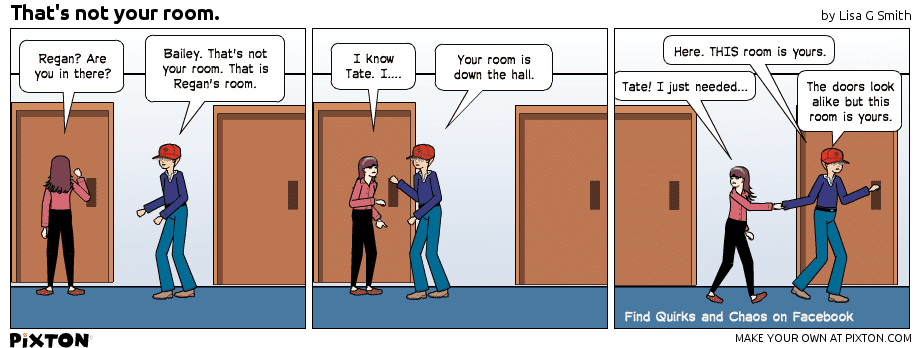
A
couple of days ago, I got groceries and had just begun moving them from the
cart to the van when a young man came up behind me, very quietly, and startled
me. I think I actually jumped. He was waiting for my shopping cart. He works at
the store and wanted to return my cart to the store for me. It would have been
much more convenient for me to stick it in the cart-return next to me when I
was finished, but he thought he was doing me a huge favor by standing there and
waiting. He didn’t SAY he wanted to return the cart for me. He just said,
“hello” and stood and waited. I could tell he had autism for several reasons.
He had the awkward gait, didn’t know what to do with his hands or eyes while he
stood waiting, and he had a monotone voice. It was very cold outside and I
commented about the temperature. He tried to have a conversation with me about
the weather but didn’t really know how. I helped him like I would my son Tate,
bouncing “the ball” back to him and asking concrete questions that he would
know how to answer. He reminded me so much of Tate and how he would have
conversed with someone.
 |
Tate with Melissa, one of his first
(and best) teachers. |
Last
week, our good friend Melissa visited our congregation and worshipped with us.
Melissa was one of Tate’s first teachers in his early intervention program.
Tate so badly wanted to have a conversation with her. He tried with, “Hey, a
church building is where you go to church.” Melissa replied appropriately then
Tate tried again: “A few days ago, Levi did something.” Melissa said, “What did
Levi do?” Tate said, “He fixed the game cube.” Then he sauntered away without
properly ending the conversation. When Tate has a conversation with someone it
is usually two exchanges with him pacing back and forth in front of the person
he is conversing with, or bouncing in place. The church building is a great
place for Tate to practice his social skills. After many worship services I
grab Tate before he bolts from the building to sit in the car, and I tell him
he has to visit with three people before he can leave the building. He hates it
when I do that. He usually picks the same three people, so sometimes I tell him
it has to be three people he doesn’t usually talk to. The poor kid. The poor
victim he chooses too! Haha They are all great sports and give it their best
effort. It is just hard to get him to make any eye contact or make much sense.
I’ve turned my church family into speech therapists for Tate.
The
day after I had the exchange with the young man while I unloaded my groceries,
I was in another store and saw another young man with autism. This guy was
probably about 15 and was there with a teacher or mentor who was supervising
him. I imagine the outing was a teaching experience or perhaps a reward for
something. The teacher was doing a fantastic job of modeling appropriate
behavior for the student. I did not gawk but I was in the same vicinity for
quite a while so I listened. The student bounced on his toes when he walked,
much like Tate does, and he had trouble knowing what topics were appropriate
for conversation. He talked at length about his high score on “Bop-it” and he
wanted to talk at length about a brand of bread that he didn’t often see on
store shelves. I imagine the teacher was having a hard time keeping a straight
face part of the time because the bread topic was so far out there. Tate does
the same sort of things. He has no idea what is appropriate to talk about and
what is not. He has no idea what kinds of things are interesting to other
people and what things are not.
Tate
has announced to his peers at school before that he was going to take a shower
when he got home and he sometimes tells his teachers he had a shower that
morning. We’ve tried to teach him that other people don’t really care to hear
about his showers. He recently tried to start a conversation by telling one of
the staff at school that her skin looked old. She is a young woman, quite
pretty, and she handled it very well but we all had a good laugh over that one
later. A day or two after that incident Tate had a substitute in his classroom
that was elderly and her skin was wrinkled. I was so worried about what their day was
like. If Tate said anything inappropriate, I didn’t get to hear about it. I
wanted to be a fly on the wall that day. On Veteran’s Day, the school invited
local veterans to come and have lunch with the students. Tate walked into the
office with his para, looked around at several older folk gathered in the
office, and started to speak. Tate’s wonderful, insightful, wise para, quickly
said, “Tate, think about what you are going to say, before you say it.” Tate
said, “Oh, never mind.” Tate just calls it like he sees it, as do most people
with autism.
Tate’s
Resource Room teacher and his Speech Therapist are always working hard on
teaching conversation starters and how to sustain a conversation. It just
doesn’t come naturally to a kid with autism like it does the rest of us. They
are teaching him how to tell a joke and the poor school secretary has heard a
joke a day for most of the year now. She is so accommodating and laughs for
him. She is worth her weight in gold and a huge part of his day.
I cannot imagine how confusing it must be to live in Tate's world. I remember once saying something about "laughing my head off" and Tate coming over to me to inspect my neck. He needed to make sure my head was still attached. Recently someone commented on being "ate up with chiggers" and Tate looked extremely confused.
We are all
working on figurative language. Each week, Tate’s Resource Room teacher sends
me a list of three to five new idioms or cliché’s they will be working on that
week so I can reinforce them at home. It is so cool when I hear him use one of
those at home. He has learned things like “I’m on fire” and “under the weather”
and “letting the cat out of the bag.” These are the things that we all
understand when we hear them due to the context. They have to be taught,
systematically, to a person with autism. Otherwise, they will not “have a clue”
what you are talking about.
If you have not ever read, Seeing Ghosts, then click on the link and enjoy.
Find me on Facebook at Quirks and Chaos. Like what you read? Want to become a follower? Click on the Google Friend Following gadget on this blog. It's over on the right side and asks you to subscribe. Or you can add the URL (the web address in your search bar) to your Reading List. You can do that by clicking the plus sign in front of the URL. Thanks!